THE SHORT ANSWER
Estimate interior painting from the surfaces being painted, the preparation required and the agreed coating system. Keep wall area separate from floor area, and identify finishing trim, ceilings and doors as their own scope decisions.
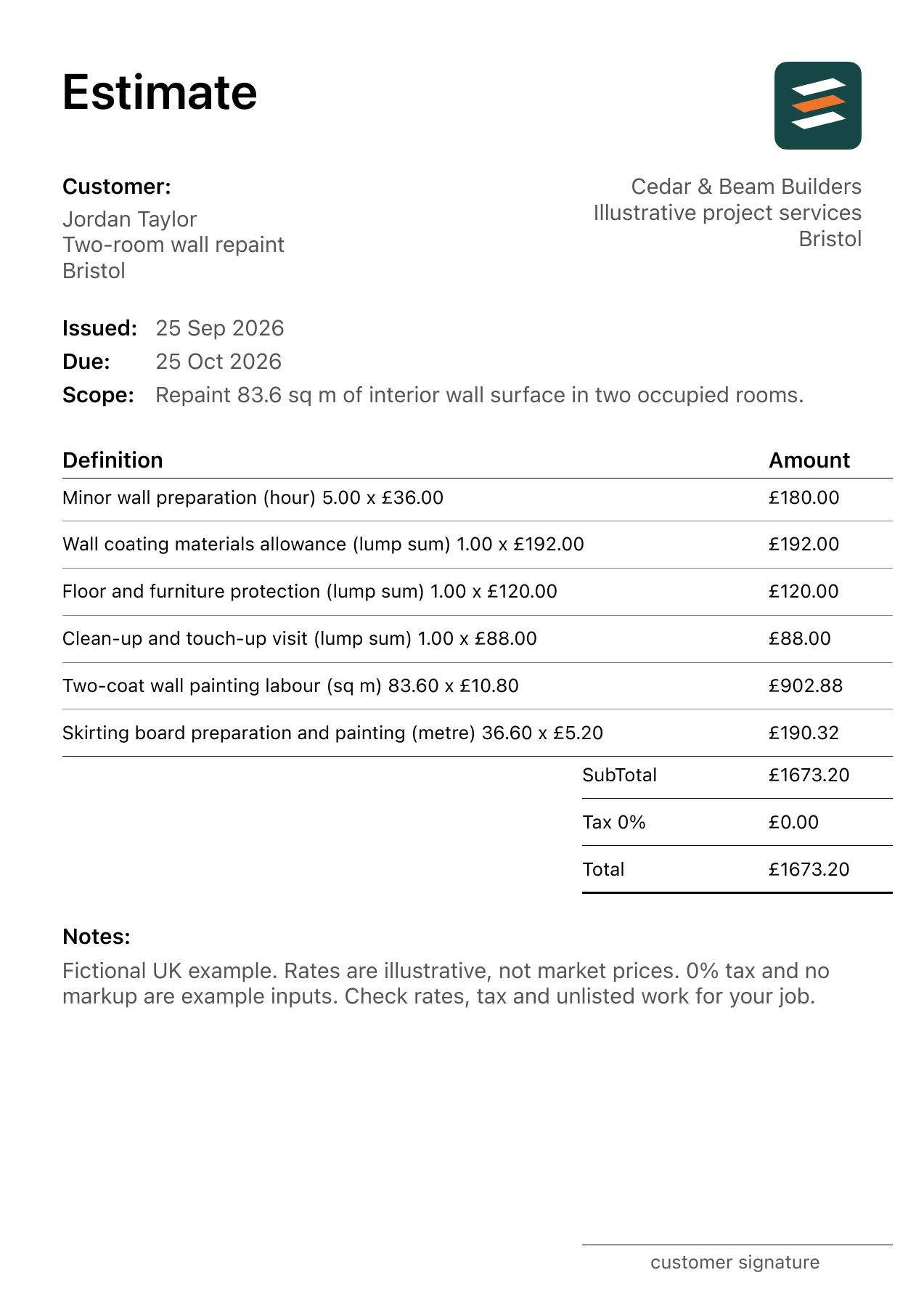
Use this fictional two-room wall repaint in Bristol to plan the estimate. The agreed work is: Repaint 83.6 sq m of interior wall surface in two occupied rooms. Protect floors and furniture, complete minor nail-hole filling, apply two finish coats to walls, and paint 36.6 metres of skirting board. Ceilings and doors are excluded. The matching interior painting example and PDF shows the same inputs. These quantities and rates are teaching examples; use your own site measurements, product selections, supplier information and labour figures for a customer job.
Estimating interior painting costs: wall area, coats and preparation
An interior painting estimate starts with paintable surface area rather than room floor area. For each room, multiply wall perimeter by height and apply a stated convention for openings. Record ceilings and trim separately. A small room can have substantial wall area; using its floor measurement as the paint quantity can leave both materials and labour inadequately described.
Estimate finish paint from measured area multiplied by the agreed number of coats, divided by the chosen product's stated coverage. Keep primer separate, and allow purchasing quantities to follow available container sizes. Coverage is a product input, not a universal constant. Record existing condition, color change, preparation scope and furniture protection before assigning labour; quantity alone does not establish the work needed.
A house painting estimator is most useful when each room remains visible in the worksheet. Compare quotes using the same surfaces, preparation and finish expectation. Ask who supplies paint and whether touch-up of previous defects is included. State whether the price includes moving furniture and painting closets, doors or trim so those tasks cannot silently change the result.
A separate worked planning example
Independent illustrative arithmetic: 80 sq m × 2 chosen coats ÷ a hypothetical coverage input of 10 sq m per litre gives 16 litres of finish paint before container rounding. The coverage is invented; use the selected product's actual information. These hypothetical inputs are not market rates and do not replace the amounts in the linked PDF.
Cost and scope questions
How do I estimate interior painting costs?
List surfaces, preparation, coats and selected paint; calculate material from actual coverage and price the defined labour separately. Add protection, handling and other agreed tasks before reviewing the total.
Can house floor area tell me how much paint to buy?
It cannot determine wall height, perimeter, openings or ceiling and trim scope. Use measured paintable surfaces and the selected product coverage.
1. Measure wall area, not room floor area
Record each wall’s length and height, then document how openings are handled. The floor area of a room is not its paintable wall area. A consistent measurement note helps explain the number the customer sees and prevents switching bases between rooms.
2. Define preparation as work
Minor filling, sanding, stain treatment and damaged plasterboard are not interchangeable tasks. This example includes minor nail-hole filling only. Price larger repairs separately and photograph the existing condition for your own estimating record.
3. Describe coats and material responsibility
State the number of finish coats included and whether primer is part of the scope. Confirm the product, sheen and colour changes before ordering. Estimate material quantities using the selected manufacturer’s current coverage information and the actual surfaces.
4. Price finishing trim separately
Skirting board length is a different measurement from wall area. Separate finishing trim also makes it clear whether doors, frames and windows are included. If a customer removes finishing trim from the job, the adjustment can be made without guessing at a share of the wall price.
Calculate the measured lines
The PDF uses 6 separate items. For example, Minor wall preparation is 5 hours × £36.00 = £180.00; Two-coat wall painting labour is 83.6 sq m × £10.80 = £902.88. Check that each unit describes the work being priced: area for a surface, metres for a run, and a count or defined lump sum for a discrete task. A material purchase allowance can differ from the installed quantity when product sizes, cuts or layout require it.
Adding the 6 rounded line amounts gives £1,673.20. The example PDF uses a 0% tax input and no markup; those settings do not determine how to price or treat an actual job. Do not copy the rates as a local price guide.
Check the scope before sending
- Confirm wall versus ceiling scope.
- Record product, sheen and number of coats.
- Agree who moves and replaces furniture.
- List major repairs and door painting separately.
Outside the base scope: No ceiling coating, door painting, wallpaper removal, major plasterboard repair or hazardous-material remediation.
Confirm the site address, selected products, access, quantities, customer details and validity date. If opening the work reveals a different condition, record the change and update the relevant line before asking the customer to approve the revised work. Preview every page of the PDF so the written scope, line amounts and total tell the same story.
Common questions
Do I use floor area for an interior painting estimate?
Use the area of the surfaces you will paint. Floor area can describe a room but should not silently replace measured wall or ceiling area in an itemised estimate.
How do I show paint and labour?
Separate a defined materials allowance from preparation and application labour, or describe clearly what a combined line includes. Avoid charging for materials twice.
FROM SITE NOTES TO AN ITEMISED PDF
Make your own interior painting estimate.
Enter the scope in Estimates on iPhone or Android, edit each quantity and rate in pounds, add your business and customer details, and review the PDF before sharing it.