THE SHORT ANSWER
Estimate carpet with installed room area, purchasing quantity, pad, removal and transitions separated. Confirm roll layout and seams before treating a square-metre material allowance as final.
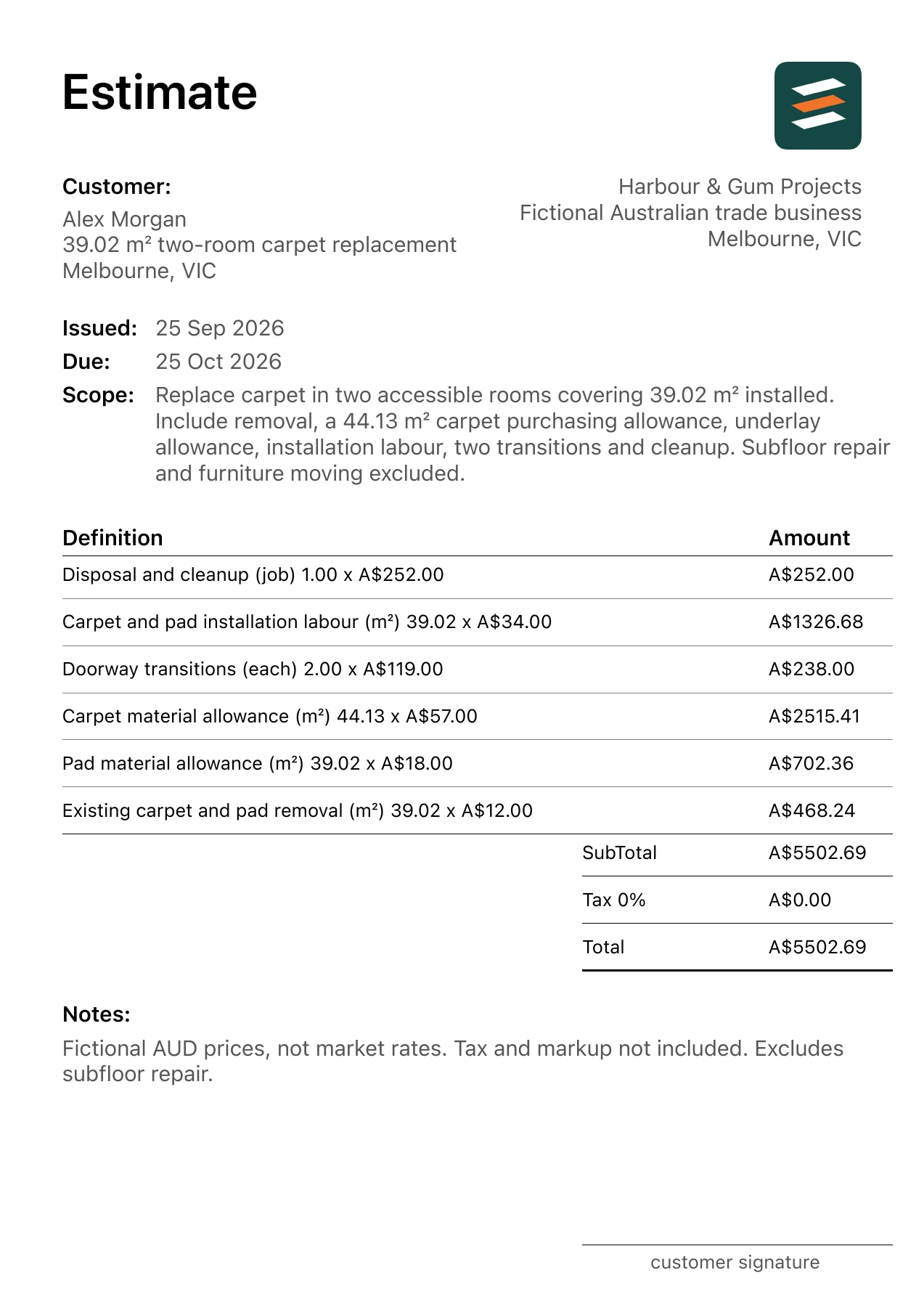
This Australian walkthrough uses a fictional 39.02 m² two-room carpet replacement in Melbourne, Victoria. The matching carpet installation estimate example shows the same item quantities and amounts in an app-exported PDF. Measure your own site and replace the example rates before issuing a client quote.
1. Measure each room
Take dimensions and record wardrobes, alcoves and doorways. Installed area is 39.02 m² in this example, but roll layout can require a different purchase quantity.
For this example, the agreed starting scope is: Replace carpet in two accessible rooms covering 39.02 m² installed. Include removal, a 44.13 m² carpet purchasing allowance, underlay allowance, installation labour, two transitions and cleanup. Subfloor repair and furniture moving excluded. A change to a listed surface, product or access assumption should trigger a revised line or allowance.
2. Plan seams and material
The 44.13 m² allowance reflects a fictional layout, not a standard waste percentage. Confirm carpet width, pattern and seam placement for the selected product.
3. Identify pad and subfloor work
Pad is a distinct material line. This scope assumes a suitable subfloor and excludes repairs that appear after old carpet is removed.
4. Define transition and handling
Count threshold transitions and assign furniture movement, disposal and final cleanup so the total reflects the handoff expected by the customer.
Worked carpet installation calculation
Two checkable lines from the example are 39.02 m² × A$12.00 = A$468.24; 44.13 m² × A$57.00 = A$2,515.41. The full 6-line estimate totals A$5,502.69 with the demonstration tax input at 0%. The amount is a fictional scenario, not an Australian market rate or a recommended selling price.
Material purchasing and installed quantities may differ. For your own estimate, use the actual takeoff, supplier prices, labour plan, access and disposal requirements. Decide how overhead, profit and the applicable tax treatment affect your final quote; do not copy the example's zero tax setting.
Before you share the estimate
- Measure rooms and wardrobes.
- Verify roll width and seam plan.
- Select carpet and pad.
- Count transitions and assign furniture moving.
Scope boundary in this example: No subfloor repair, furniture moving, stair carpeting, specialty pattern matching or floor levelling.
Confirm the client details and location, item descriptions, measured units, total and validity date. If opening up the work reveals a different condition, document the changed scope and price before proceeding.
Common questions about carpet installation
Why is purchase area above room area?
Carpet roll layout and seams can require more material than installed area. Verify the actual takeoff for the chosen product.
Is pad included in carpet material?
Not in this example. It has a separate allowance so product choices and quantities remain clear.
FROM SCOPE TO PDF
Make your own carpet installation estimate.
Describe the actual job in Estimates on iPhone or Android, then review every quantity, rate and scope note. Add your business and client details, check the document and share an itemised PDF. Example amounts are fictional, and some app features may require an in-app purchase.