THE SHORT ANSWER
An exterior painting estimate should identify cladding and trim quantities, preparation, coating materials and access assumptions. Separate repair work from repainting so the customer can see what the base price actually covers.
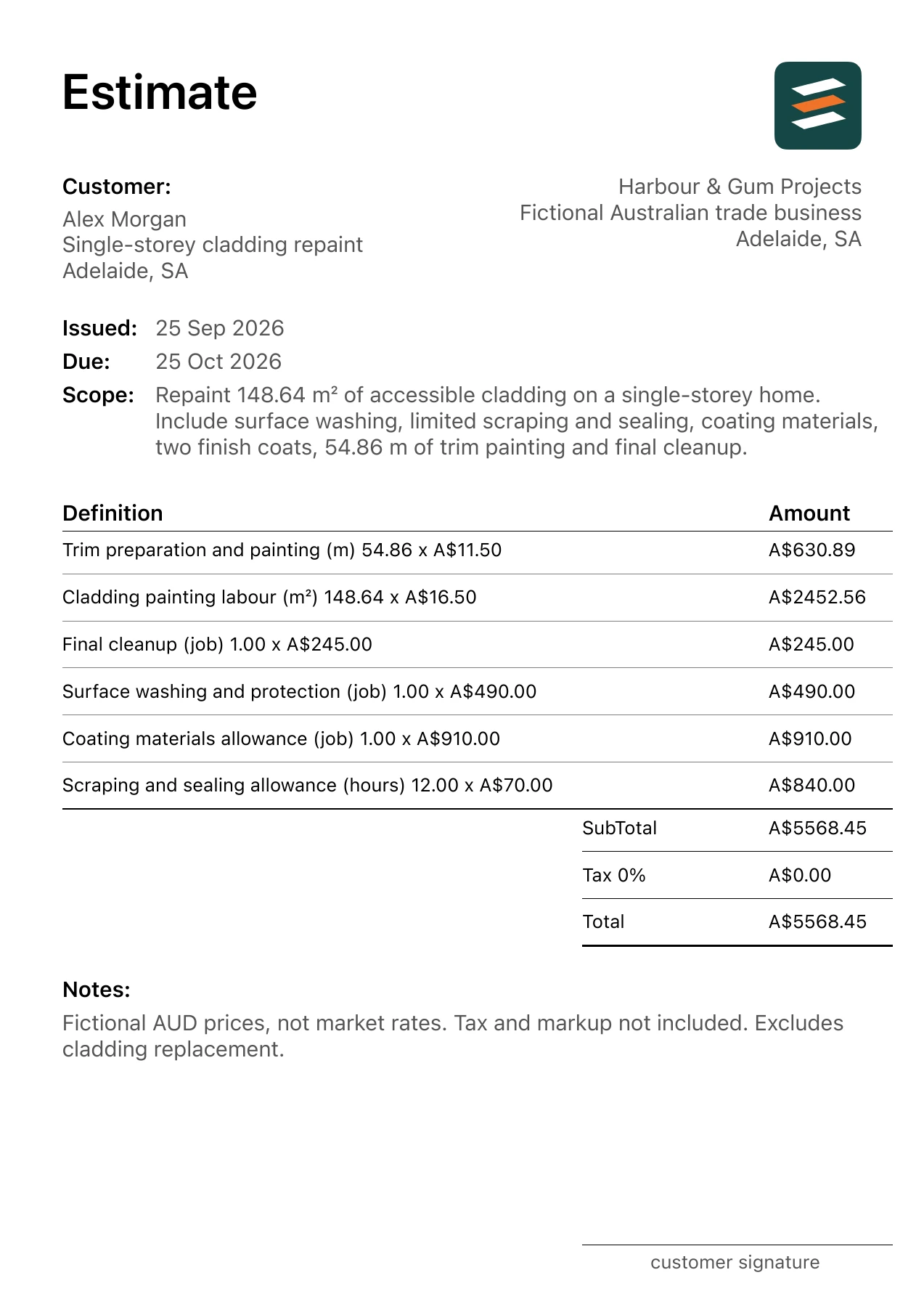
This Australian walkthrough uses a fictional single-storey cladding repaint in Adelaide, South Australia. The matching exterior painting estimate example shows the same item quantities and amounts in an app-exported PDF. Measure your own site and replace the example rates before issuing a client quote.
1. Inventory each surface
Break the exterior into cladding, trim, fascia, doors and any other surfaces the customer requests. Record material types and existing conditions. A single overall square-metre number can hide exclusions that become disputes later.
For this example, the agreed starting scope is: Repaint 148.64 m² of accessible cladding on a single-storey home. Include surface washing, limited scraping and sealing, coating materials, two finish coats, 54.86 m of trim painting and final cleanup. A change to a listed surface, product or access assumption should trigger a revised line or allowance.
2. Inspect preparation and repairs
A repaint allowance is not a replacement budget for rotten cladding. Describe the preparation included and list damaged components separately. If their extent is unknown, explain when the repair scope will be assessed and how it will be priced.
3. State access and protection assumptions
Height, landscaping, parked vehicles and limited access can change the work effort. The example assumes a single-storey property with ordinary access. Record what must be moved and who is responsible for it before work begins.
4. Allow for coating and weather constraints
Confirm the chosen product’s preparation and application requirements instead of promising one universal schedule. Discuss a workable weather window and explain that final scheduling follows site and product conditions. Keep this note distinct from the estimate’s pricing-validity date.
Worked exterior painting calculation
Two checkable lines from the example are 12 hours × A$70.00 = A$840.00; 148.64 m² × A$16.50 = A$2,452.56. The full 6-line estimate totals A$5,568.45 with the demonstration tax input at 0%. The amount is a fictional scenario, not an Australian market rate or a recommended selling price.
Material purchasing and installed quantities may differ. For your own estimate, use the actual takeoff, supplier prices, labour plan, access and disposal requirements. Decide how overhead, profit and the applicable tax treatment affect your final quote; do not copy the example's zero tax setting.
Before you share the estimate
- Identify every included exterior surface.
- Record preparation limits and visible damage.
- Confirm access equipment and protection needs.
- Agree colours and coating products before procurement.
Scope boundary in this example: No cladding replacement, multi-storey access, deck staining or hazardous-coating remediation. Product and site conditions must be checked before work.
Confirm the client details and location, item descriptions, measured units, total and validity date. If opening up the work reveals a different condition, document the changed scope and price before proceeding.
Common questions about exterior painting
Should cladding repairs be included in a painting price?
Include only repairs you have inspected and scoped. If a repair quantity is uncertain, state that it is excluded or provide a clearly defined allowance with a process for revision.
Is exterior painting priced only by square metre?
Surface area can price application work, while trim length, preparation hours, materials and access may need separate lines.
FROM SCOPE TO PDF
Make your own exterior painting estimate.
Describe the actual job in Estimates on iPhone or Android, then review every quantity, rate and scope note. Add your business and client details, check the document and share an itemised PDF. Example amounts are fictional, and some app features may require an in-app purchase.