THE SHORT ANSWER
Estimate repointing from the actual deteriorated wall area and joint condition, with compatible mortar and access assumptions stated. Treat unstable masonry or water entry as separate assessment work.
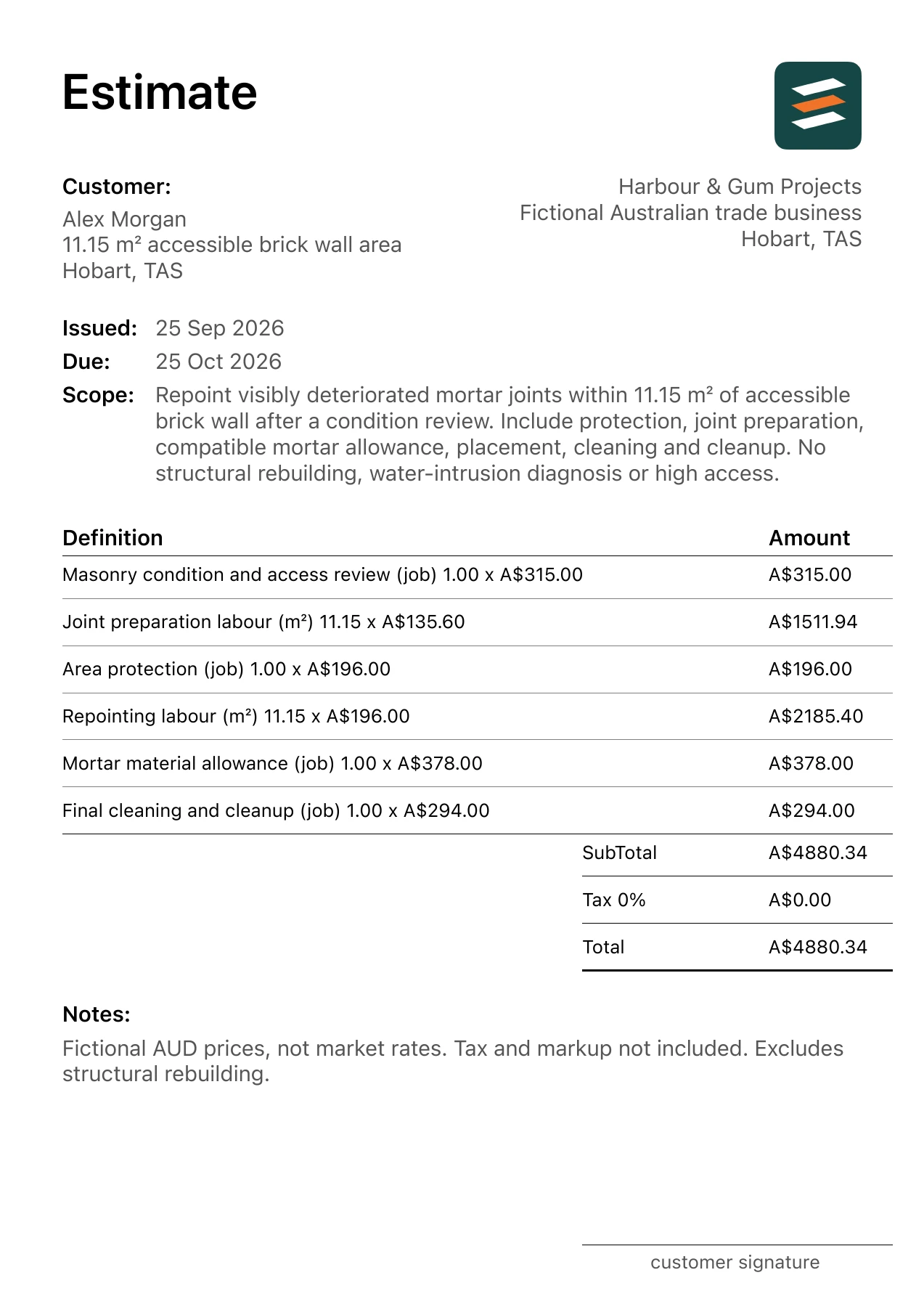
This Australian walkthrough uses a fictional 11.15 m² accessible brick wall area in Hobart, Tasmania. The matching brick joint repointing estimate example shows the same item quantities and amounts in an app-exported PDF. Measure your own site and replace the example rates before issuing a client quote.
1. Map the joint work
Mark the wall area and distinguish widespread joint deterioration from isolated patches. Wall measured area is a pricing basis here only because the repair density is described.
For this example, the agreed starting scope is: Repoint visibly deteriorated mortar joints within 11.15 m² of accessible brick wall after a condition review. Include protection, joint preparation, compatible mortar allowance, placement, cleaning and cleanup. No structural rebuilding, water-intrusion diagnosis or high access. A change to a listed surface, product or access assumption should trigger a revised line or allowance.
2. Review the masonry condition
Loose units, movement or water damage may require work beyond mortar joints. Have the appropriate specialist confirm the wall is suitable for the proposed repair scope.
3. Specify the mortar approach
Material compatibility and finish appearance matter. Identify the selected mortar and sample approval process for the actual wall rather than assuming one mix suits every building.
4. Define access and cleaning
The sample assumes ordinary ground-level access. Include protection and final cleaning, and separately price scaffolding or sensitive adjacent surfaces if present.
Worked brick joint repointing calculation
Two checkable lines from the example are 11.15 m² × A$135.60 = A$1,511.94; 11.15 m² × A$196.00 = A$2,185.40. The full 6-line estimate totals A$4,880.34 with the demonstration tax input at 0%. The amount is a fictional scenario, not an Australian market rate or a recommended selling price.
Material purchasing and installed quantities may differ. For your own estimate, use the actual takeoff, supplier prices, labour plan, access and disposal requirements. Decide how overhead, profit and the applicable tax treatment affect your final quote; do not copy the example's zero tax setting.
Before you share the estimate
- Mark measured repair area.
- Review brick and structural condition.
- Confirm compatible mortar and finish.
- Record access and cleaning constraints.
Scope boundary in this example: No structural rebuilding, brick replacement, waterproofing design, high scaffolding or concealed damage correction.
Confirm the client details and location, item descriptions, measured units, total and validity date. If opening up the work reveals a different condition, document the changed scope and price before proceeding.
Common questions about brick joint repointing
Can all brick walls use one repointing price?
Joint density, access, condition and mortar selection vary. Measure and inspect the specific wall.
Does repointing stop every leak?
It should not be presented as a universal leak remedy. Identify and assess the water path separately.
FROM SCOPE TO PDF
Make your own brick joint repointing estimate.
Describe the actual job in Estimates on iPhone or Android, then review every quantity, rate and scope note. Add your business and client details, check the document and share an itemised PDF. Example amounts are fictional, and some app features may require an in-app purchase.