THE SHORT ANSWER
Estimate skirting board installation from measured measured length, profile selection, corner details and finish scope. Separate purchased trim from installed length and show whether removal, filling, sealing and painting are included.
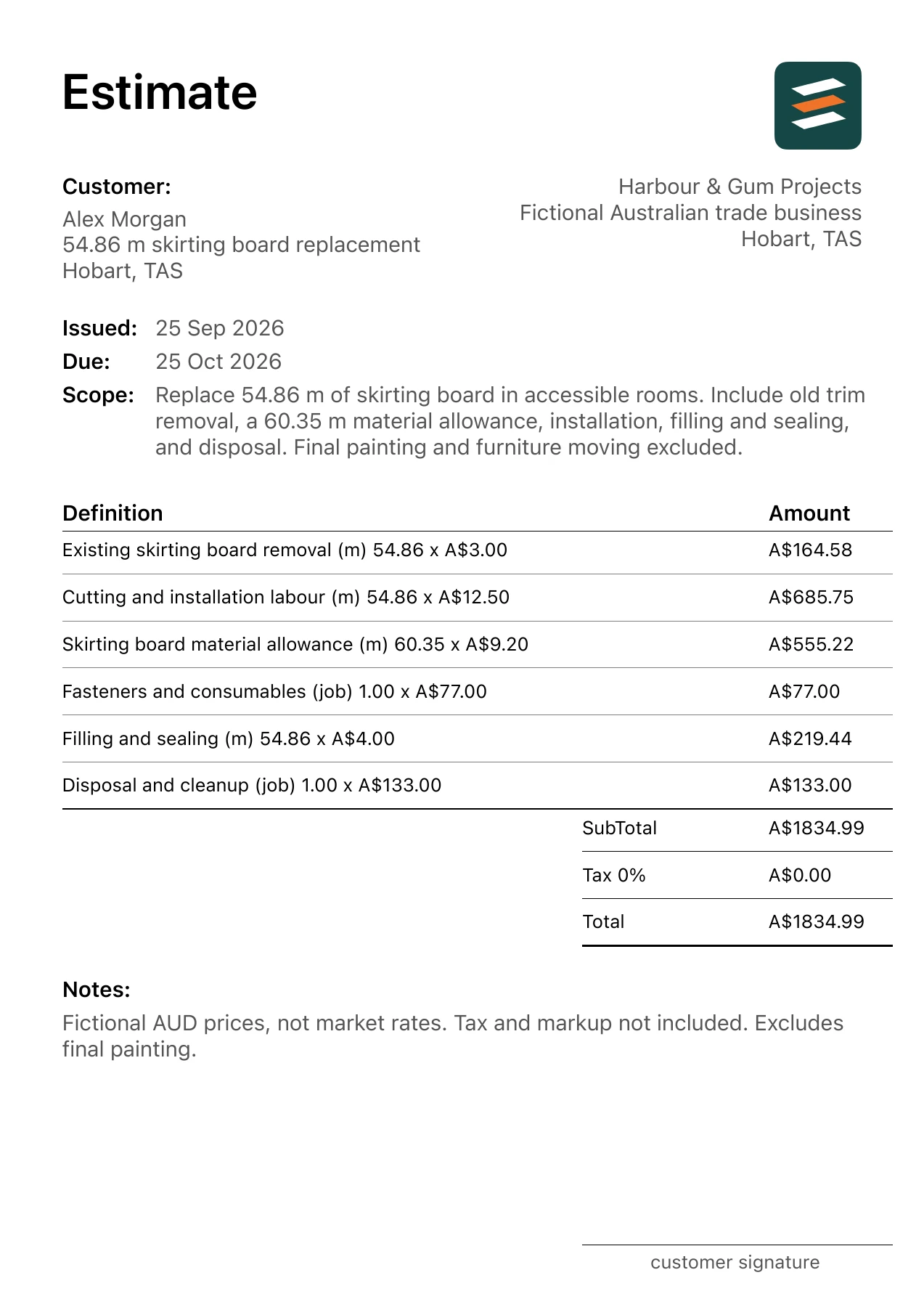
This Australian walkthrough uses a fictional 54.86 m skirting board replacement in Hobart, Tasmania. The matching skirting board and trim estimate example shows the same item quantities and amounts in an app-exported PDF. Measure your own site and replace the example rates before issuing a client quote.
1. Measure the runs to receive trim
Measure wall runs and record how door openings are deducted. Identify wardrobes and short returns that are easy to miss. Use a room-by-room takeoff so the total can be checked against the actual scope.
For this example, the agreed starting scope is: Replace 54.86 m of skirting board in accessible rooms. Include old trim removal, a 60.35 m material allowance, installation, filling and sealing, and disposal. Final painting and furniture moving excluded. A change to a listed surface, product or access assumption should trigger a revised line or allowance.
2. Select the profile before pricing material
Height, profile and material affect the purchasing list. This example includes 60.35 m of material for 54.86 m installed. Check available stock lengths and cutting layout instead of treating that difference as a rule for every job.
3. Consider the detail work
Corners, transitions and short sections can add handling even when total footage is modest. Record unusual details and the condition of adjacent surfaces. If you use one installation rate, make sure it reflects the actual mix of work.
4. Define paint-ready and final finish
Filling and sealing are listed here, while final painting is excluded. Explain the handoff clearly. If the customer expects a fully painted installation, add the coating scope instead of leaving it as an assumed part of carpentry.
Worked skirting board and trim calculation
Two checkable lines from the example are 54.86 m × A$3.00 = A$164.58; 60.35 m × A$9.20 = A$555.22. The full 6-line estimate totals A$1,834.99 with the demonstration tax input at 0%. The amount is a fictional scenario, not an Australian market rate or a recommended selling price.
Material purchasing and installed quantities may differ. For your own estimate, use the actual takeoff, supplier prices, labour plan, access and disposal requirements. Decide how overhead, profit and the applicable tax treatment affect your final quote; do not copy the example's zero tax setting.
Before you share the estimate
- Measure all included rooms and wardrobes.
- Confirm the profile and material.
- Record corners and special transitions.
- Separate paint-ready preparation from painting.
Scope boundary in this example: No final painting, major wall repair, custom millwork, furniture moving or door-casing replacement.
Confirm the client details and location, item descriptions, measured units, total and validity date. If opening up the work reveals a different condition, document the changed scope and price before proceeding.
Common questions about skirting board and trim
Is skirting board estimated in square metres?
The trim itself is normally described by linear length. A room’s floor area does not directly tell you the skirting board length, so measure the included wall runs.
Does installing skirting board include painting?
Only if the quote says so. State filling, sealing, priming and finish painting individually or define the combined scope clearly.
FROM SCOPE TO PDF
Make your own skirting board and trim estimate.
Describe the actual job in Estimates on iPhone or Android, then review every quantity, rate and scope note. Add your business and client details, check the document and share an itemised PDF. Example amounts are fictional, and some app features may require an in-app purchase.