THE SHORT ANSWER
Estimate baseboard installation from measured linear footage, profile selection, corner details and finish scope. Separate purchased trim from installed length and show whether removal, filling, caulking and painting are included.
The worked project in this guide is 180 linear ft. baseboard replacement. It uses an original fictional job to explain the estimating decisions, with a matching baseboard and trim PDF example. Replace the example inputs with your measurements, supplier quotes and labor costs.
Baseboards fitting cost: measure length and define the finish
To estimate how much it costs to fit baseboards, measure the wall runs that actually receive trim and record doorway interruptions. Keep each room's installed length visible. Select the profile, material and finish before comparing supply prices; a narrow painted profile and a different decorative product are not equivalent just because both follow the same room perimeter.
Calculate purchasing from installed length and an agreed cutting allowance, then round to the supplier's stock lengths. Count corners and unusual transitions so the fitting scope is clear. Separate old-trim removal, new material, fitting, filling or sealing as specified, and painting. State whether adjacent wall touch-up is included and whether the contractor reuses existing pieces or supplies replacements.
When comparing fitting cost, check whether the rate is per linear ft., per room or a fixed defined task. Do not multiply the purchase length by a labor rate meant for installed length without agreement. Record which rooms are cleared and how materials reach the site. Damage exposed behind removed trim should become an assessed repair decision, rather than an open-ended promise inside the base fitting price.
A separate worked planning example
Independent illustrative arithmetic: a hypothetical 50 linear ft. installation at $3.00 per linear ft. gives $150.00 of fitting. Separately chosen supply of $90.00 and painting of $60.00 make $300.00 for these lines. These hypothetical inputs are not market rates and do not replace the amounts in the linked PDF.
Cost and scope questions
How much to fit baseboards?
Price the measured installed length with your contractor’s rate, then identify supply, removal, corners, finish and access separately. No universal per-length rate is established here.
Is painting included in skirting board fitting cost?
Only if the quote defines it. Fitting unfinished material, filling joints and completing a painted finish are different handoff conditions.
1. Measure the runs to receive trim
Measure wall runs and record how door openings are deducted. Identify closets and short returns that are easy to miss. Use a room-by-room takeoff so the total can be checked against the actual scope.
2. Select the profile before pricing material
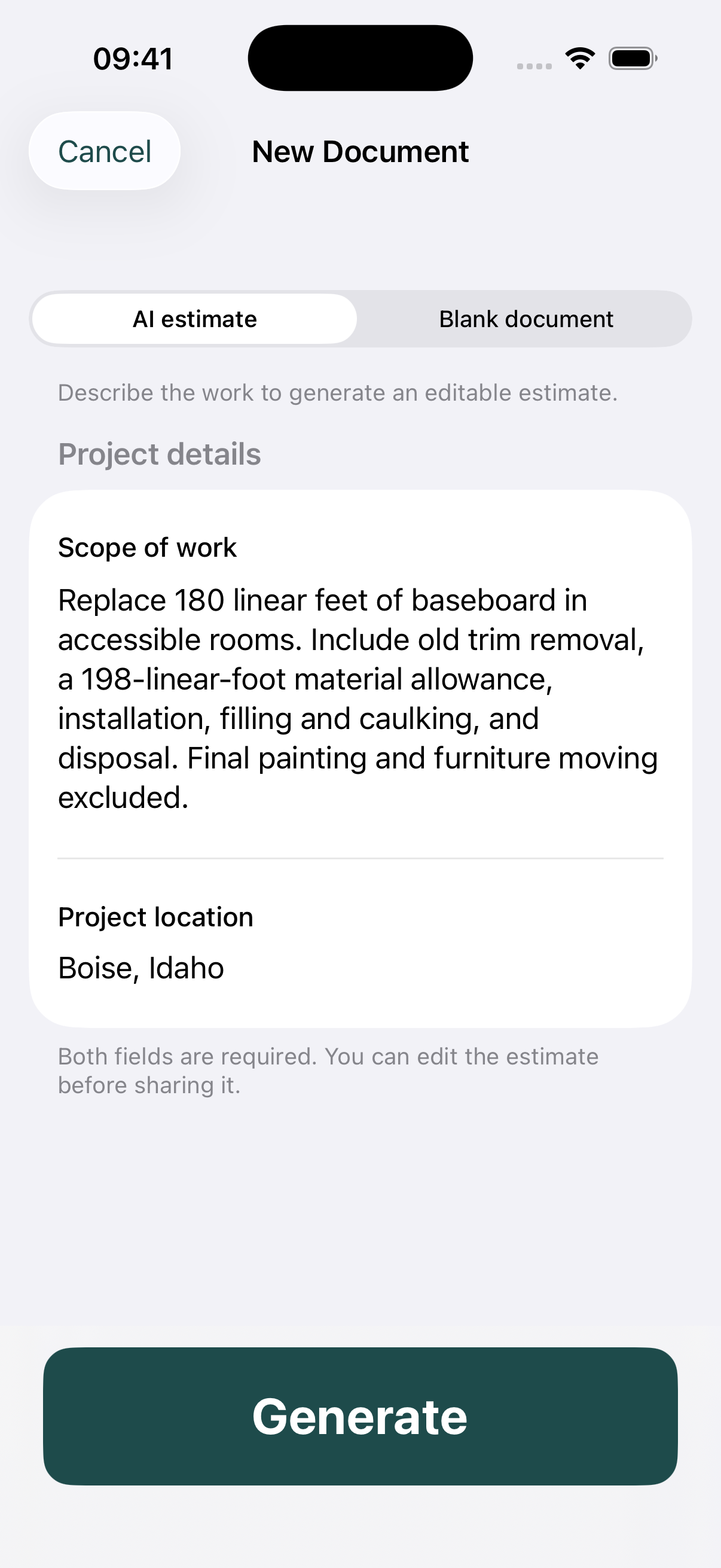
Height, profile and material affect the purchasing list. This example includes 198 linear feet of material for 180 feet installed. Check available stock lengths and cutting layout instead of treating that difference as a rule for every job.
3. Consider the detail work
Corners, transitions and short sections can add handling even when total footage is modest. Record unusual details and the condition of adjacent surfaces. If you use one installation rate, make sure it reflects the actual mix of work.
4. Define paint-ready and final finish
Filling and caulking are listed here, while final painting is excluded. Explain the handoff clearly. If the customer expects a fully painted installation, add the coating scope instead of leaving it as an assumed part of carpentry.
A worked baseboard and trim calculation
The example material allowance is 198 linear ft. × $2 = $396. Installation uses 180 × $2.75 = $495. The purchased quantity includes a stated layout allowance rather than extra installed trim.
The complete example contains 6 lines totaling $1,311.00 before any tax or markup. These are deliberately stated example prices, not a survey, regional price recommendation or offer to perform the job.
To set your own selling price, review direct costs and decide how you will cover overhead and profit. For example, adding 20% to a $1,000 cost gives $1,200; it does not produce a 20% gross margin. Use the approach you intend consistently, and avoid adding a second markup to rates that already include it.
Before you send the estimate
- Measure all included rooms and closets.
- Confirm the profile and material.
- Record corners and special transitions.
- Separate paint-ready preparation from painting.
Example scope boundary: No final painting, major wall repair, custom millwork, furniture moving or door-casing replacement.
Review the client name, location, validity date and all calculations. Tax is not included in this example; determine the correct treatment for the actual work rather than copying a sample percentage.
Common questions
Is baseboard estimated in square feet?
The trim itself is normally described by linear length. A room’s floor area does not directly tell you the baseboard length, so measure the included wall runs.
Does installing baseboard include painting?
Only if the quote says so. State filling, caulking, priming and finish painting individually or define the combined scope clearly.
TAKE THE NEXT JOB FROM SCOPE TO PDF
Make your own baseboard and trim estimate.
Use Estimates on iPhone or Android to draft a scope with AI assistance or enter your own items. Review quantities and rates, add your business logo, and export a PDF. Example files are free to view; app features may require an in-app purchase.