THE SHORT ANSWER
Estimate air sealing from identified openings and joint lengths, with access and material selection described. Keep the sealing scope separate from insulation, testing and repair of unknown cavities.
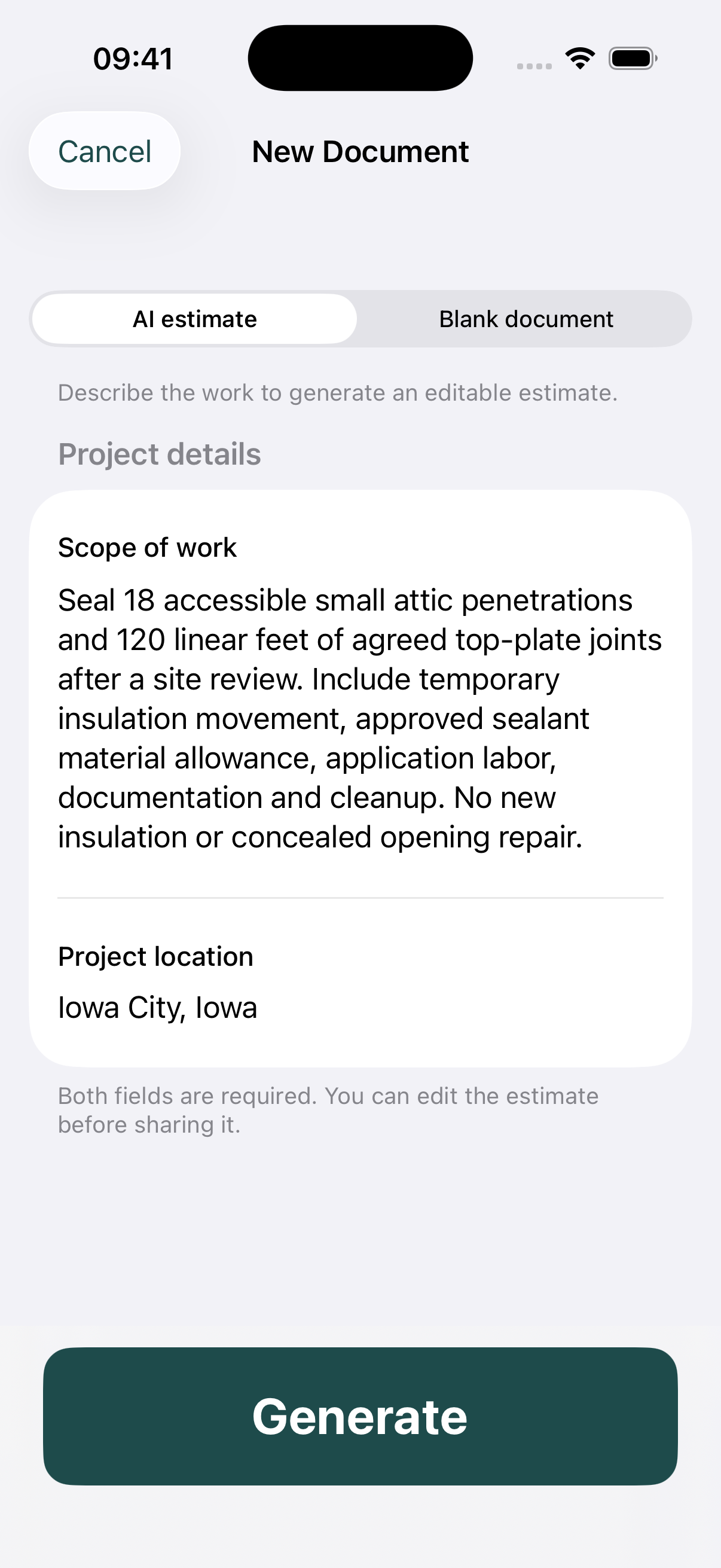
The worked project in this guide is defined penetrations in one attic. It uses an original fictional job to explain the estimating decisions, with a matching attic air sealing PDF example. Replace the example inputs with your measurements, supplier quotes and labor costs.
1. Mark the openings
Count the penetrations and measure the specific joints planned for treatment. A vague attic-wide line makes it difficult to verify what the crew will actually seal.
2. Identify access and preparation
Existing insulation may need careful movement and replacement around work locations. The example allows that effort without assuming wholesale insulation removal.
3. Choose suitable materials
Match sealant and backing to the actual assembly and applicable requirements. The fictional material allowance must be replaced with a job-specific product list.
4. Define evidence at handoff
Record the treated locations and the limited documentation included. Any diagnostic testing or new insulation should be a distinct scope with its own quantities.
A worked attic air sealing calculation
Eighteen penetrations × $38 = $684. The 120 linear feet of top-plate joints × $4.50 = $540, giving $1,224 for those two sealing labor lines.
The complete example contains 6 lines totaling $1,964.00 before any tax or markup. These are deliberately stated example prices, not a survey, regional price recommendation or offer to perform the job.
To set your own selling price, review direct costs and decide how you will cover overhead and profit. For example, adding 20% to a $1,000 cost gives $1,200; it does not produce a 20% gross margin. Use the approach you intend consistently, and avoid adding a second markup to rates that already include it.
Before you send the estimate
- Map and count accessible openings.
- Measure joint lengths.
- Review material and assembly requirements.
- Separate testing and insulation.
Example scope boundary: No blower-door testing, new insulation, concealed cavity repair, ventilation change or hazardous-material handling.
Review the client name, location, validity date and all calculations. Tax is not included in this example; determine the correct treatment for the actual work rather than copying a sample percentage.
Common questions
Can attic air sealing be priced by floor area?
Area gives context, but identified openings, joint lengths and access define this example scope.
Is insulation part of air sealing?
Only if separately listed. This sample moves existing material temporarily but does not add new insulation.
TAKE THE NEXT JOB FROM SCOPE TO PDF
Make your own attic air sealing estimate.
Use Estimates on iPhone or Android to draft a scope with AI assistance or enter your own items. Review quantities and rates, add your business logo, and export a PDF. Example files are free to view; app features may require an in-app purchase.