THE SHORT ANSWER
Estimate appliance installation by unit and connection type. Record who supplies each appliance, confirm suitable existing hookups and separate positioning, connection parts and disposal so the quote matches the actual work.
The worked project in this guide is three owner-supplied kitchen appliances. It uses an original fictional job to explain the estimating decisions, with a matching kitchen appliance installation PDF example. Replace the example inputs with your measurements, supplier quotes and labor costs.
1. Build a unit schedule
List model numbers, dimensions, delivery dates and the exact installation task for each unit. A refrigerator placement and dishwasher connection require different labor assumptions even when both arrive together.
2. Check the prepared site
Confirm access width, floor protection, cabinet openings and the availability of suitable existing services before setting a fixed price. Any service alteration belongs in a separately reviewed scope.
3. Assign delivery and disposal
State whether the contractor receives deliveries, removes old appliances and hauls packaging. Owner-supplied products can still create handling work that needs a line or an exclusion.
4. Describe the handoff
Include a basic check of the dishwasher connection and document product damage or installation limits. This example does not test or connect the electric range or refrigerator utilities; those tasks need their own scope if requested.
A worked kitchen appliance installation calculation
The dishwasher connection is 1 unit × $210 = $210. Adding the separate $90 connection-parts allowance gives $300 for that connection-related example work; the other appliances and setup remain separate.
The complete example contains 6 lines totaling $740.00 before any tax or markup. These are deliberately stated example prices, not a survey, regional price recommendation or offer to perform the job.
To set your own selling price, review direct costs and decide how you will cover overhead and profit. For example, adding 20% to a $1,000 cost gives $1,200; it does not produce a 20% gross margin. Use the approach you intend consistently, and avoid adding a second markup to rates that already include it.
Before you send the estimate
- Match each appliance to its opening and connection.
- Confirm who supplies and receives the units.
- Inspect access and existing service readiness.
- State old-unit and packaging disposal responsibilities.
Example scope boundary: No refrigerator water hookup, appliance purchase, old-unit disposal, wiring, gas work, cabinet changes or warranty service.
Review the client name, location, validity date and all calculations. Tax is not included in this example; determine the correct treatment for the actual work rather than copying a sample percentage.
Common questions
Is appliance delivery included in installation?
Only if the estimate says so. Identify who receives, stores and moves each unit to its final location.
Can one installation rate cover every appliance?
Different units need different handling and connections. Count and describe each appliance before combining any labor in a package price.
TAKE THE NEXT JOB FROM SCOPE TO PDF
Make your own kitchen appliance installation estimate.
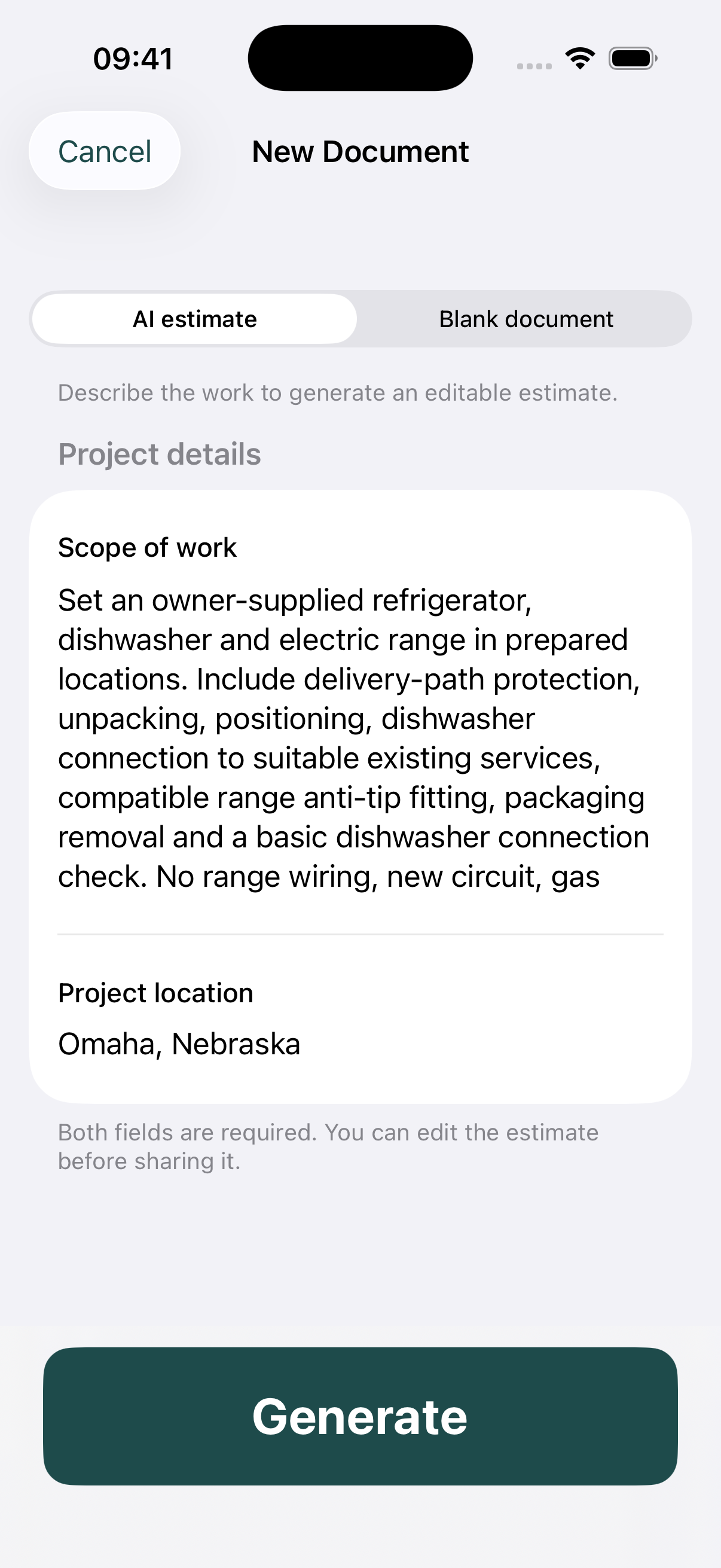
Use Estimates on iPhone or Android to draft a scope with AI assistance or enter your own items. Review quantities and rates, add your business logo, and export a PDF. Example files are free to view; app features may require an in-app purchase.