THE SHORT ANSWER
Estimate a paver path by installed area, material purchase area, edge length and site preparation. Confirm the route, grade and ground conditions before treating example quantities as a final construction plan.
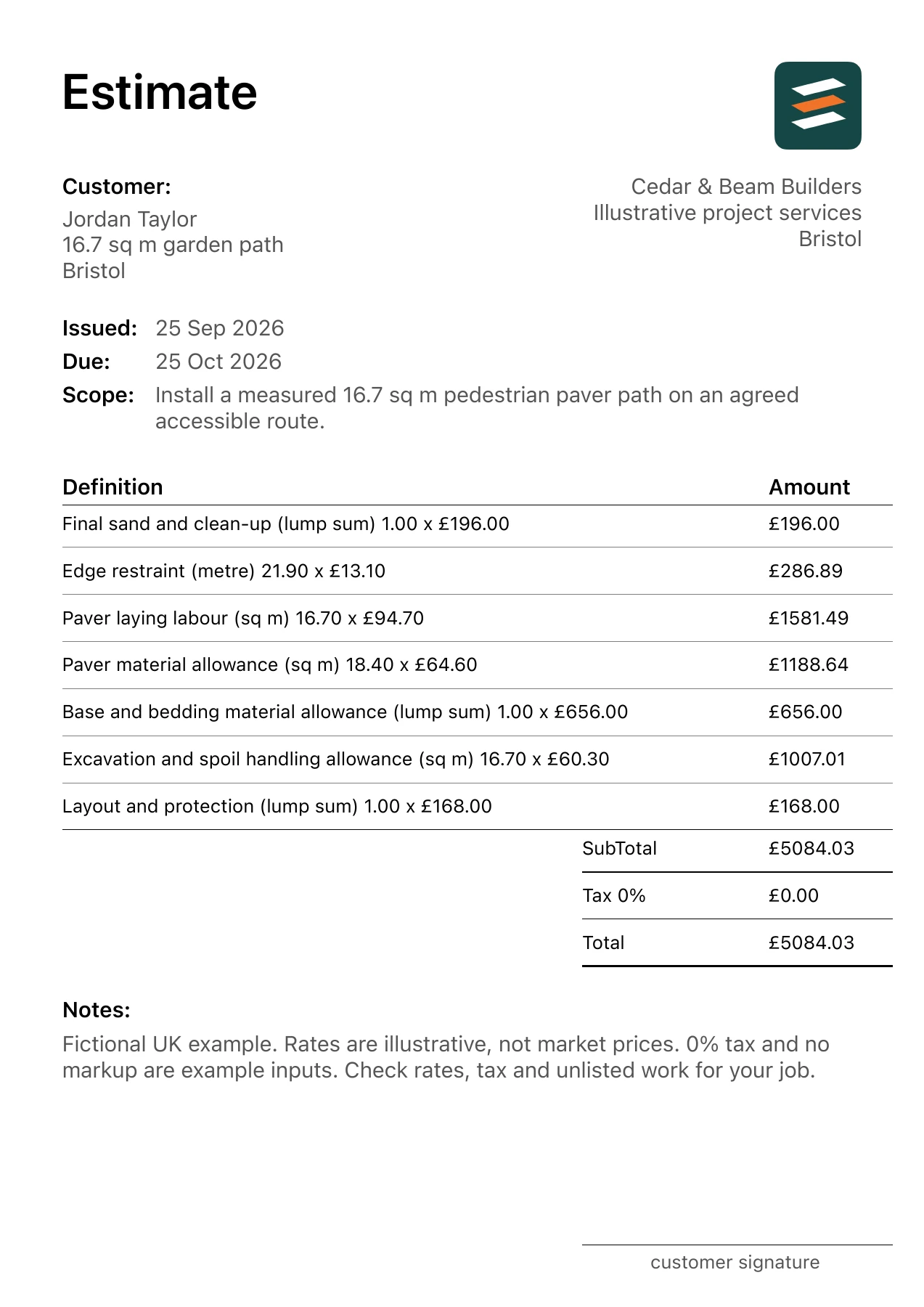
Use this fictional 16.7 sq m garden path in Bristol to plan the estimate. The agreed work is: Install a measured 16.7 sq m pedestrian paver path on an agreed accessible route. Include excavation allowance, base material allowance, 18.4 sq m paver purchase allowance, bedding, 21.9 metres of edge restraint, laying labour and clean-up. Drainage design and unsuitable-ground correction excluded. The matching paver path installation example and PDF shows the same inputs. These quantities and rates are teaching examples; use your own site measurements, product selections, supplier information and labour figures for a customer job.
1. Lay out the path
Record width, length, curves and transitions. The installed area is 16.7 sq m; the 18.4 sq m product allowance reflects only this illustrative cutting layout.
2. Inspect grade and ground
The sample assumes a suitable pedestrian route. Changes to drainage, roots or unsuitable soil need a site-specific design and separate price.
3. Count edges independently
Edge restraint follows the path perimeter and may not scale directly with surface area. Measure it from the selected geometry.
4. Describe the handoff
State joint fill, final clean-up and who handles excavated material. Avoid implying a vehicle-rated or engineered installation from a pedestrian path example.
Calculate the measured lines
The PDF uses 7 separate items. For example, Excavation and spoil handling allowance is 16.7 sq m × £60.30 = £1,007.01; Paver material allowance is 18.4 sq m × £64.60 = £1,188.64. Check that each unit describes the work being priced: area for a surface, metres for a run, and a count or defined lump sum for a discrete task. A material purchase allowance can differ from the installed quantity when product sizes, cuts or layout require it.
Adding the 7 rounded line amounts gives £5,084.03. The example PDF uses a 0% tax input and no markup; those settings do not determine how to price or treat an actual job. Do not copy the rates as a local price guide.
Check the scope before sending
- Confirm route, dimensions and transitions.
- Inspect grade and soil.
- Measure edge restraint.
- Assign spoil handling and drainage design.
Outside the base scope: No drainage redesign, unsuitable-soil stabilization, retaining wall, lighting or vehicle-rated pavement.
Confirm the site address, selected products, access, quantities, customer details and validity date. If opening the work reveals a different condition, record the change and update the relevant line before asking the customer to approve the revised work. Preview every page of the PDF so the written scope, line amounts and total tell the same story.
Common questions
Why are paver purchase and installed areas different?
Cut pieces and stock packaging can change purchasing. Show the assumption and revise it for the actual layout and product.
Can path area price edging?
No. Measure the length of edges that need restraint from the path layout.
FROM SITE NOTES TO AN ITEMISED PDF
Make your own paver path installation estimate.
Enter the scope in Estimates on iPhone or Android, edit each quantity and rate in pounds, add your business and customer details, and review the PDF before sharing it.