THE SHORT ANSWER
Estimate a paver walkway by installed area, material purchase area, edge length and site preparation. Confirm the route, grade and ground conditions before treating example quantities as a final construction plan.
The worked project in this guide is 180 sq. ft. garden walkway. It uses an original fictional job to explain the estimating decisions, with a matching paver walkway installation PDF example. Replace the example inputs with your measurements, supplier quotes and labor costs.
Build a paving cost estimate from measured layers
Start a paving estimate with the measured finished area in sq ft, selected paver and the specified build-up. Material purchases include a justified cutting allowance and whole-pack rounding, while installation labor follows the agreed laid area. Record the laying pattern and edges so a rectangle’s area does not disguise the work around curves or obstacles.
Separate excavation, disposal, compacted base, bedding, pavers, edge restraints and joints. Measure base quantities using the specified depth and the supplier’s stated ordering basis. Loose delivery volume and compacted volume are not interchangeable. Keep grading and drainage decisions tied to the project specification rather than inferring them from a price per area.
To compare a paving cost estimator with a contractor quote, align product selection, preparation, access and handover. Delivery and cutting can be a meaningful part of a small path job. Use current supplier quotes in USD and clearly state whether tax is included. The worked PDF uses fictional figures to illustrate the line structure.
A separate worked planning example
Illustrative takeoff: 80 sq ft of paving with a chosen 10% cutting allowance requires 88 sq ft before pack rounding. Edge restraint is a separate measured linear-foot quantity, not a percentage of the paving area.
Cost and scope questions
Does a paving area calculator include excavation?
No. Calculate the specified excavation and layers separately, with their own disposal and delivery assumptions.
Can I compare every paving quote per unit of area?
Only after aligning product, layer specification, edges, access and included work. Different scopes produce misleading unit-rate comparisons.
1. Lay out the path
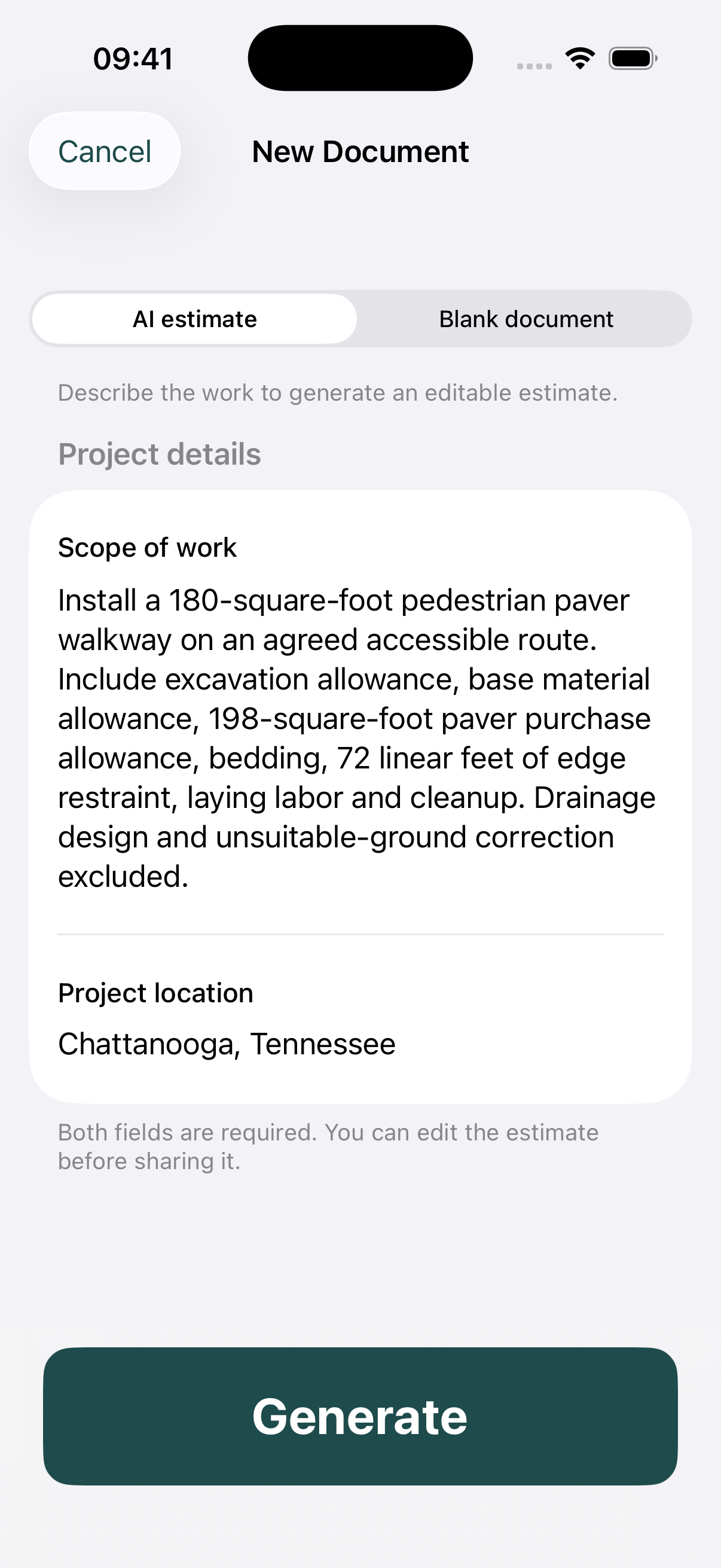
Record width, length, curves and transitions. The installed area is 180 square feet; the 198-square-foot product allowance reflects only this illustrative cutting layout.
2. Inspect grade and ground
The sample assumes a suitable pedestrian route. Changes to drainage, roots or unsuitable soil need a site-specific design and separate price.
3. Count edges independently
Edge restraint follows the walkway perimeter and may not scale directly with surface area. Measure it from the selected geometry.
4. Describe the handoff
State joint fill, final cleanup and who handles excavated material. Avoid implying a vehicle-rated or engineered installation from a pedestrian walkway example.
A worked paver walkway installation calculation
Paver purchasing is 198 sq. ft. × $7.50 = $1,485. Laying labor is 180 sq. ft. × $11 = $1,980.
The complete example contains 7 lines totaling $6,360.00 before any tax or markup. These are deliberately stated example prices, not a survey, regional price recommendation or offer to perform the job.
To set your own selling price, review direct costs and decide how you will cover overhead and profit. For example, adding 20% to a $1,000 cost gives $1,200; it does not produce a 20% gross margin. Use the approach you intend consistently, and avoid adding a second markup to rates that already include it.
Before you send the estimate
- Confirm route, dimensions and transitions.
- Inspect grade and soil.
- Measure edge restraint.
- Assign spoil handling and drainage design.
Example scope boundary: No drainage redesign, unsuitable-soil stabilization, retaining wall, lighting or vehicle-rated pavement.
Review the client name, location, validity date and all calculations. Tax is not included in this example; determine the correct treatment for the actual work rather than copying a sample percentage.
Common questions
Why are paver purchase and installed areas different?
Cut pieces and stock packaging can change purchasing. Show the assumption and revise it for the actual layout and product.
Can walkway area price edging?
No. Measure the length of edges that need restraint from the path layout.
TAKE THE NEXT JOB FROM SCOPE TO PDF
Make your own paver walkway installation estimate.
Use Estimates on iPhone or Android to draft a scope with AI assistance or enter your own items. Review quantities and rates, add your business logo, and export a PDF. Example files are free to view; app features may require an in-app purchase.