THE SHORT ANSWER
Price a backsplash from measured wall area, tile purchasing quantity, edges, penetrations and substrate condition. Keep material selections and installation labor visible so a tile change does not hide the rest of the scope.
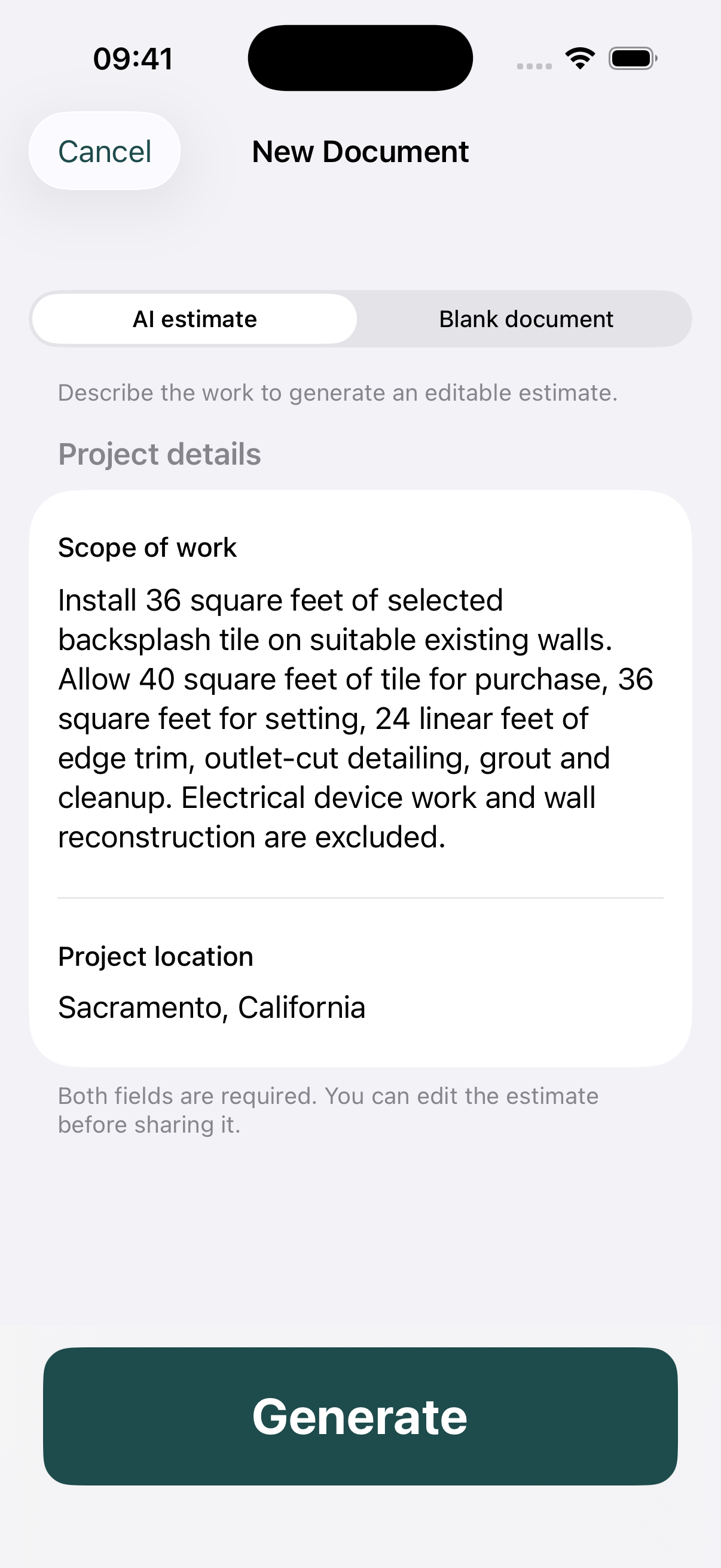
The worked project in this guide is 36 sq. ft. kitchen backsplash. It uses an original fictional job to explain the estimating decisions, with a matching kitchen backsplash installation PDF example. Replace the example inputs with your measurements, supplier quotes and labor costs.
1. Measure the splash zones
Record height and length at every wall segment, including behind the range. Note where tile starts and stops at cabinets, windows and open ends; countertop length alone does not establish tile area.
2. Count cuts and exposed edges
Outlets and short returns affect layout work. Identify trim length and penetrations separately so a simple field-tile area does not conceal the detailed portions of the job.
3. Confirm tile and substrate
The 40-square-foot purchase allowance is an illustrative takeoff for 36 square feet installed. Verify the chosen tile, pattern and wall condition before converting it into an order.
4. Define the finish boundary
List grout, sealant, outlet-cover handling and cleanup. Any wall repair, countertop change or electrical alteration should be a separate approved item.
A worked kitchen backsplash installation calculation
The example tile allowance is 40 sq. ft. × $9 = $360, while tile setting is 36 sq. ft. × $19 = $684. Those amounts use different quantities for a stated reason.
The complete example contains 7 lines totaling $1,717.00 before any tax or markup. These are deliberately stated example prices, not a survey, regional price recommendation or offer to perform the job.
To set your own selling price, review direct costs and decide how you will cover overhead and profit. For example, adding 20% to a $1,000 cost gives $1,200; it does not produce a 20% gross margin. Use the approach you intend consistently, and avoid adding a second markup to rates that already include it.
Before you send the estimate
- Measure each wall segment and end point.
- Record tile format and layout direction.
- Count outlets and exposed edges.
- Confirm wall suitability and device responsibilities.
Example scope boundary: No countertop replacement, wall reconstruction, electrical device relocation or specialty tile pattern beyond the described selection.
Review the client name, location, validity date and all calculations. Tax is not included in this example; determine the correct treatment for the actual work rather than copying a sample percentage.
Common questions
Why buy more tile than the installed area?
Cuts and layout can require additional material. State the purchasing quantity as an example assumption and revise it for the selected tile and actual pattern.
Do outlet cutouts belong in the backsplash estimate?
Yes when they affect tile cutting. Distinguish tile cuts from electrical device work, which may require its own scope.
TAKE THE NEXT JOB FROM SCOPE TO PDF
Make your own kitchen backsplash installation estimate.
Use Estimates on iPhone or Android to draft a scope with AI assistance or enter your own items. Review quantities and rates, add your business logo, and export a PDF. Example files are free to view; app features may require an in-app purchase.